Top Turf Cleaning Mistakes Homeowners Make
The turf cleaning mistakes homeowners make most often usually seem harmless at first, but over time they can contribute to damaged fibers, displaced infill, poor drainage, recurring odor, and unnecessary repair costs.
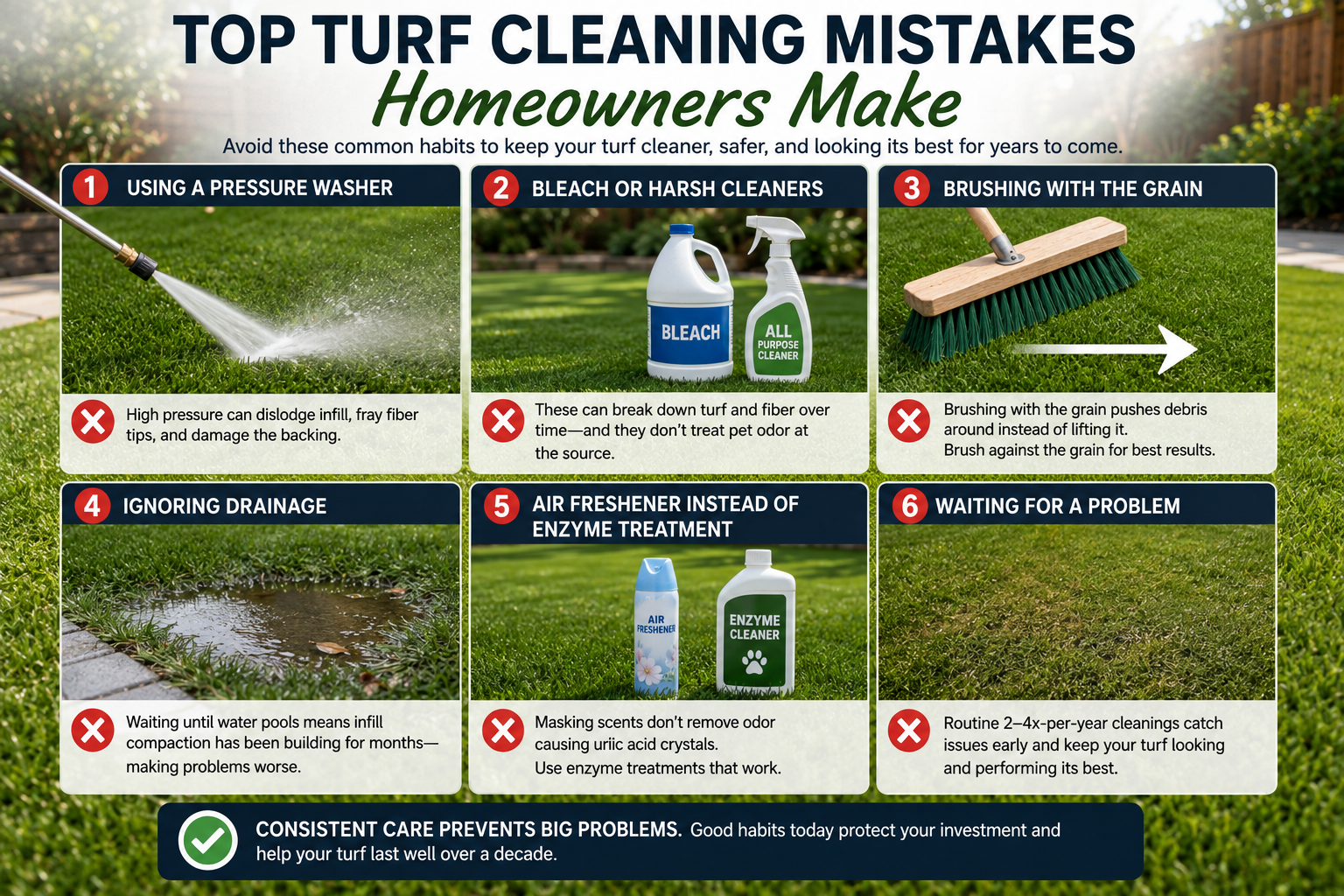
Most turf damage we see on service calls isn’t from age – it’s from a handful of common cleaning habits that seem harmless but add up over time.
1. Using a Pressure Washer on Artificial Turf
High-pressure water can dislodge infill, fray fiber tips, and in some cases damage the turf backing where the fibers are secured. For normal rinsing between professional cleanings, a garden hose with moderate pressure is usually the safer option.
2. Using Bleach or Harsh Household Cleaners
Bleach and other harsh household products can degrade turf fibers, coatings, or backing over time. They also are not designed specifically to address persistent pet urine residue below the surface, so they may mask odor without solving the underlying problem.
3. Brushing Turf in the Wrong Direction
Brushing in the same direction the turf fibers naturally lay can push debris around without doing much to lift flattened areas. Grooming against the grain with a stiff, non-metal brush can help raise the fibers and improve appearance.
4. Ignoring Drainage Until Water Starts Pooling
Poor drainage often develops gradually as debris settles into the turf or infill becomes compacted. By the time standing water is obvious, the problem may have been building for months. Routine cleaning and grooming can help reduce buildup before drainage noticeably slows.
5. Masking Pet Odor Instead of Treating the Source
Air fresheners and surface deodorizers may temporarily improve smell, but they do not necessarily address urine residue that has moved into the infill or backing. Persistent odor usually requires targeted pet odor removal rather than repeated fragrance application.
6. Waiting Until the Turf Looks Bad to Maintain It
Artificial turf often shows visible symptoms only after performance has already started declining. Flattened fibers, standing water, odor, and debris buildup are easier to manage when routine maintenance is performed before they become obvious problems.
7. Ignoring Small Repairs Until They Spread
Loose seams, lifted edges, low spots, and isolated worn areas can often be handled as targeted repairs. Ignoring them allows foot traffic, weather, and normal use to enlarge the affected area and can turn a relatively small repair into a more expensive project.
None of these mistakes are dramatic on their own, but together they’re the most common reason a turf install that should last well over a decade starts looking tired after just a few years.
Why the Turf Cleaning Mistakes Homeowners Make Matter
The turf cleaning mistakes homeowners make rarely destroy an installation overnight. The bigger issue is cumulative wear. Repeated pressure washing, harsh chemicals, ignored debris, poor grooming, untreated pet residue, and delayed maintenance can all shorten the useful life of otherwise serviceable artificial turf.
A simpler approach is usually better: remove surface debris regularly, rinse spills and pet-use areas promptly, groom the fibers correctly, watch drainage, and schedule professional cleaning based on how heavily the space is used.
How Often Should Artificial Turf Be Professionally Cleaned?
A lightly used decorative lawn may only need professional attention a few times per year, while yards with pets, children, mature trees, pool areas, or frequent outdoor entertaining may benefit from more regular service. The right schedule depends on traffic, debris buildup, odor, drainage, and how quickly the turf begins to look flattened or dirty.
For many residential properties, two to four professional cleanings per year is a practical baseline. Pet-heavy yards or heavily shaded properties may need more frequent treatment, especially when odor or organic buildup develops between visits.
For broader regional guidance on outdoor water conservation and landscape management in Santa Clara County, visit Valley Water outdoor conservation resources .
Need this handled by a professional?
If your turf has already developed matting, drainage problems, recurring odor, or localized damage, we can evaluate the condition and recommend cleaning, grooming, odor treatment, sanitizing, or repair.