Signs Your Turf Needs Repair
The signs your artificial turf needs repair often start small: lifted seams, uneven areas, damaged edges, flattened traffic paths, or recurring problems that routine cleaning no longer fixes.
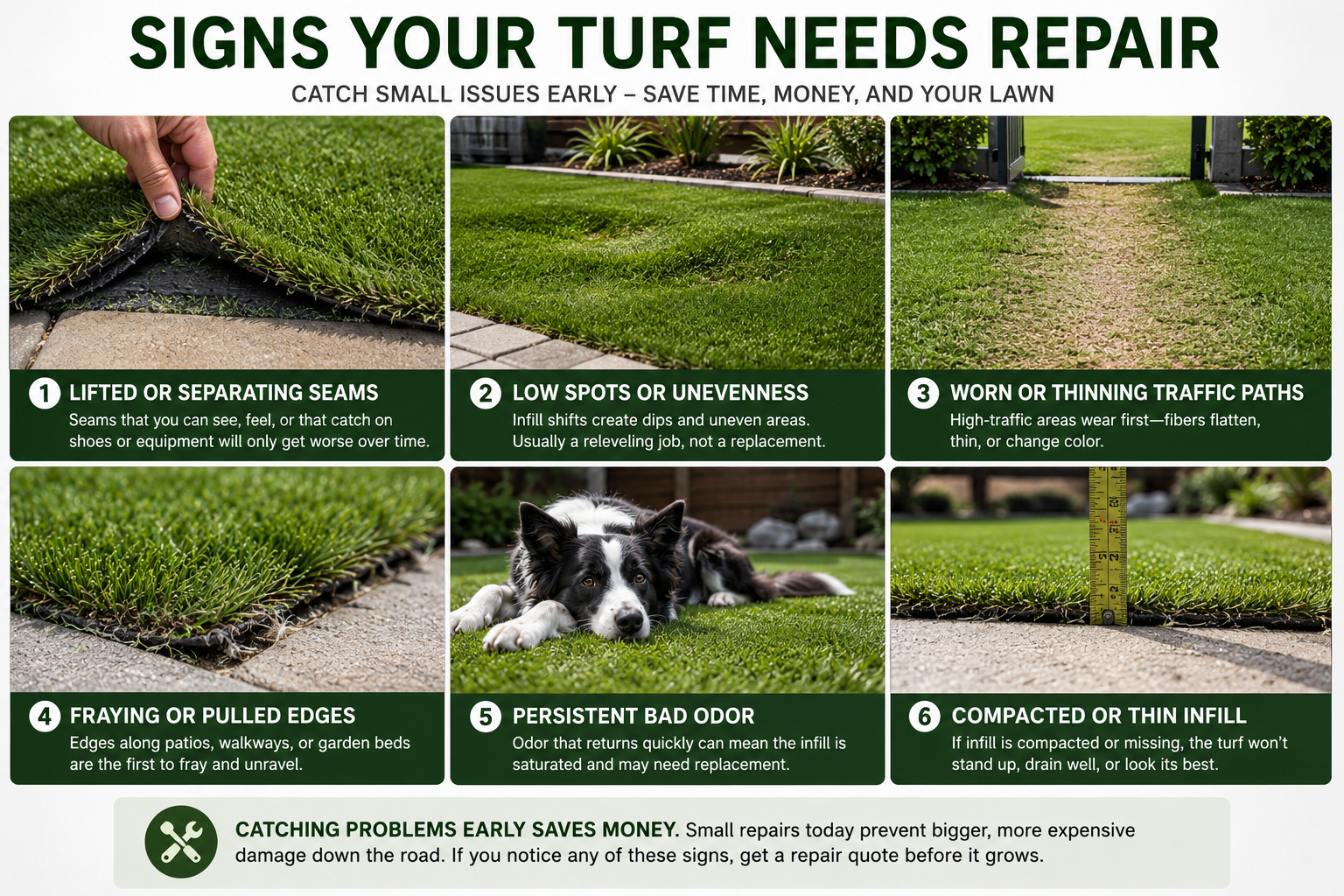
Artificial turf is durable, but it isn’t indestructible – and most damage starts as a small, fixable issue that gets more expensive the longer it’s ignored. Here are the signs worth acting on early.
1. Lifted or Separating Turf Seams
If you can see or feel a seam where two pieces of turf meet, especially if it catches a shoe or creates a visible gap, the adhesive or seaming material may have failed in that section. Left alone, the separation can widen with foot traffic, heat, and normal movement of the turf.
2. Low Spots, Dips, or Uneven Turf
Low spots can develop when infill shifts, the base settles, or drainage issues change the support beneath the turf. These areas may feel soft or uneven underfoot and can sometimes collect water after irrigation or rain. Many low spots can be corrected without replacing the entire installation.
3. Worn or Flattened Traffic Paths
Areas near gates, patio doors, walkways, pet routes, and frequently used seating zones often wear faster than the rest of the lawn. Fibers may flatten, thin, or look noticeably different from surrounding turf. Grooming and infill correction may help, but heavily damaged sections can require localized repair.
4. Fraying, Loose, or Pulled Turf Edges
Edges along patios, walkways, planting beds, and hardscape are more exposed to movement and foot traffic than the middle of the lawn. Loose or fraying edges should be addressed early because continued pulling can damage a larger section of turf.
5. Persistent Odor That Cleaning Does Not Resolve
Recurring odor is not always a repair issue, but it can indicate that infill or underlying material has become heavily contaminated. If proper cleaning and pet odor treatment do not resolve the problem, part of the infill may need to be refreshed or replaced.
6. Drainage Problems or Standing Water
Artificial turf should generally drain water through the surface and base rather than leaving persistent puddles. If water begins collecting where it did not before, the cause may be compacted infill, debris buildup, base settlement, or a drainage problem beneath the turf. The right fix depends on what is causing the restriction.
7. Wrinkles, Ripples, or Turf That No Longer Lies Flat
Wrinkles or ripples can develop when turf shifts, edges loosen, the base changes, or installation tension is lost. Small areas may be repairable by lifting, repositioning, securing, and reworking the affected section before the problem spreads.
Why the Signs Your Artificial Turf Needs Repair Matter
The signs your artificial turf needs repair are usually easier and less expensive to address when they are caught early. A loose seam, small low spot, or damaged edge may be a targeted repair today, but continued traffic and weather can enlarge the affected area over time.
Not every visible problem means the turf needs replacement. Professional inspection can help determine whether the issue can be corrected with re-seaming, releveling, grooming, infill adjustment, edge repair, or a localized patch.
For broader guidance on water-efficient landscaping in Santa Clara County, homeowners can also review Valley Water outdoor conservation resources .
Regular inspection is especially useful around seams, edges, gates, drainage areas, and other high-traffic sections. Finding small changes early can help extend the usable life of the turf and reduce the likelihood that a larger section will need replacement later.
Noticing Signs Your Artificial Turf Needs Repair?
Los Gatos Turf Cleaning serves Los Gatos and nearby areas with same-week scheduling.
Related services
This website shares information with local, licensed, and insured vendors who may contact you using the information you provide.