Artificial Turf Maintenance Guide
This artificial turf maintenance guide explains the simple weekly, monthly, seasonal, and professional care routines that help synthetic grass stay cleaner, drain properly, resist odor, and maintain its appearance over time.
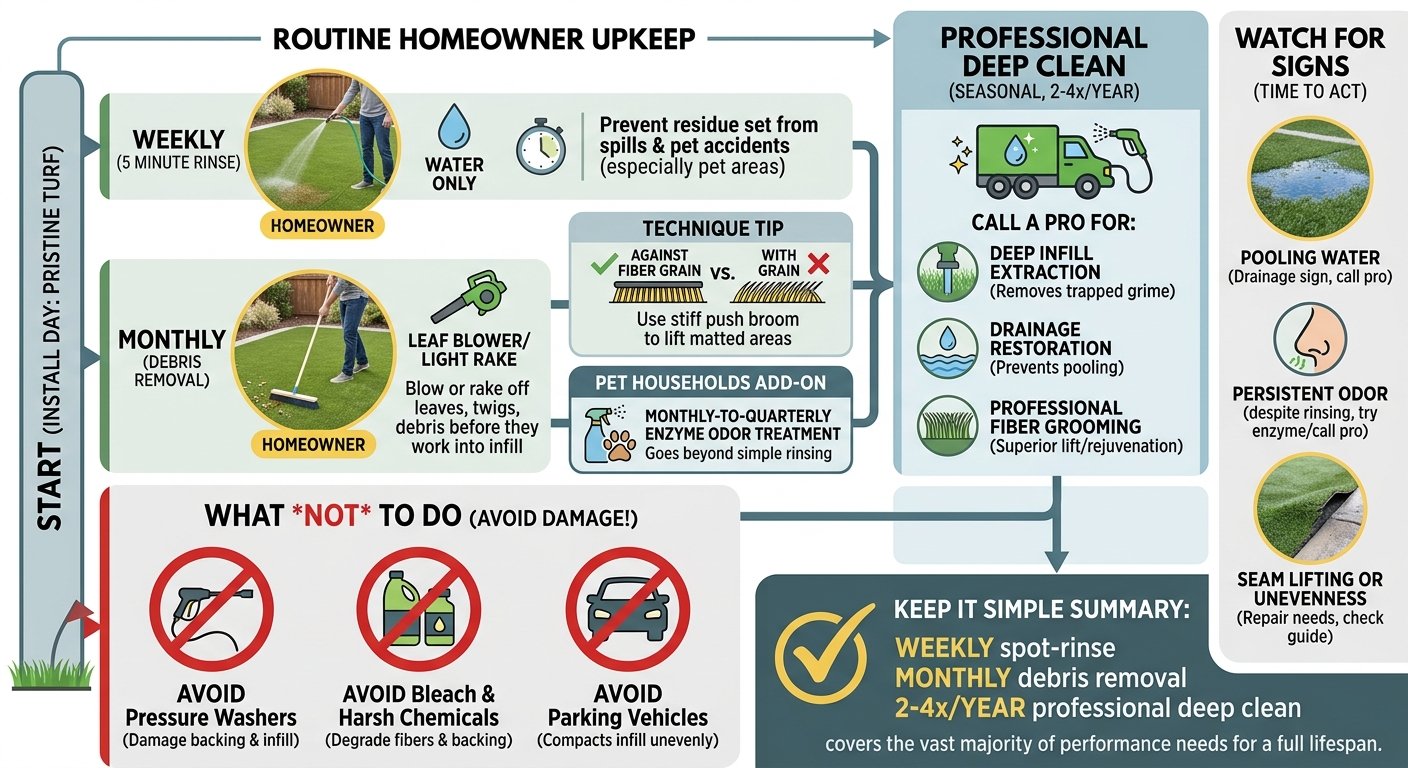
Artificial turf is lower-maintenance than natural grass, but ‘low maintenance’ isn’t ‘no maintenance.’ A simple routine, split between what you do yourself and what’s worth calling in a professional for, keeps turf looking and draining the way it did on install day.
1. Weekly Artificial Turf Maintenance
Rinse off spot spills, pet accidents, and heavily used areas before residue settles into the fibers. A quick garden-hose rinse is often enough for routine surface care, especially in pet-use areas or around outdoor dining spaces.
2. Monthly Debris Removal and Grooming
Blow or lightly rake away leaves, twigs, pollen, and surface debris before it works down into the infill. Regular debris removal helps preserve drainage and reduces how quickly the turf begins to look matted or dull.
3. Brush Against the Grain
When brushing or grooming artificial turf, work against the natural direction of the fibers. This helps lift flattened blades and restore a more upright, uniform appearance. A stiff push broom or turf-safe brush generally works better than a metal rake.
5. Schedule Seasonal Professional Deep Cleaning
Most residential turf benefits from professional deep cleaning two to four times per year depending on pets, traffic, tree cover, and overall use. Professional service can address deeper debris, grooming, infill condition, and drainage issues that normal rinsing and surface cleanup cannot fully reach.
6. Adjust Maintenance for Pet-Use Areas
Pet households often need more frequent rinsing and odor treatment than non-pet yards. Urine residue can move below the visible turf surface and accumulate in infill and backing, so recurring odor may require more than a surface rinse. See our pet odor removal service for deeper treatment options.
7. Watch for Drainage, Seam, and Wear Problems
Pooling water, persistent odor, lifted seams, loose edges, low spots, and flattened traffic paths can signal that routine maintenance is no longer enough. These issues may require deeper cleaning, infill correction, grooming, or localized turf repair .
How to Use This Artificial Turf Maintenance Guide
The easiest routine is to keep maintenance simple and consistent: rinse spills and pet-use areas as needed, remove debris monthly, groom flattened sections, and schedule professional cleaning based on traffic and yard conditions. Following this artificial turf maintenance guide can help extend the useful life of the turf while keeping the surface cleaner, better draining, and more comfortable to use.
How Often Should Artificial Turf Be Professionally Maintained?
A lightly used front lawn may only need a few professional visits each year, while yards with pets, children, mature trees, pool areas, or frequent outdoor entertaining may benefit from more regular service. The right schedule depends on how quickly debris accumulates, how often the turf is used, and whether drainage, odor, or flattened fibers are becoming noticeable.
For many Bay Area properties, a seasonal deep-cleaning schedule works well: one visit after winter debris and rain, another before peak summer use, and an additional cleaning after heavy summer traffic or fall leaf drop. Pet-heavy yards may need more frequent odor treatment between those deeper cleaning visits.
For broader regional guidance on outdoor water conservation and landscape management in Santa Clara County, visit Valley Water outdoor conservation resources .
Need this handled by a professional?
If your turf needs more than routine maintenance, we can evaluate its condition and recommend professional cleaning, grooming, pet odor treatment, sanitizing, or localized repair.