Why Turf Sanitizing Matters for Kids & Pets
Turf sanitizing for kids and pets helps address bacteria, allergens, organic residue, and other buildup that can remain on artificial turf even when the surface looks visually clean.
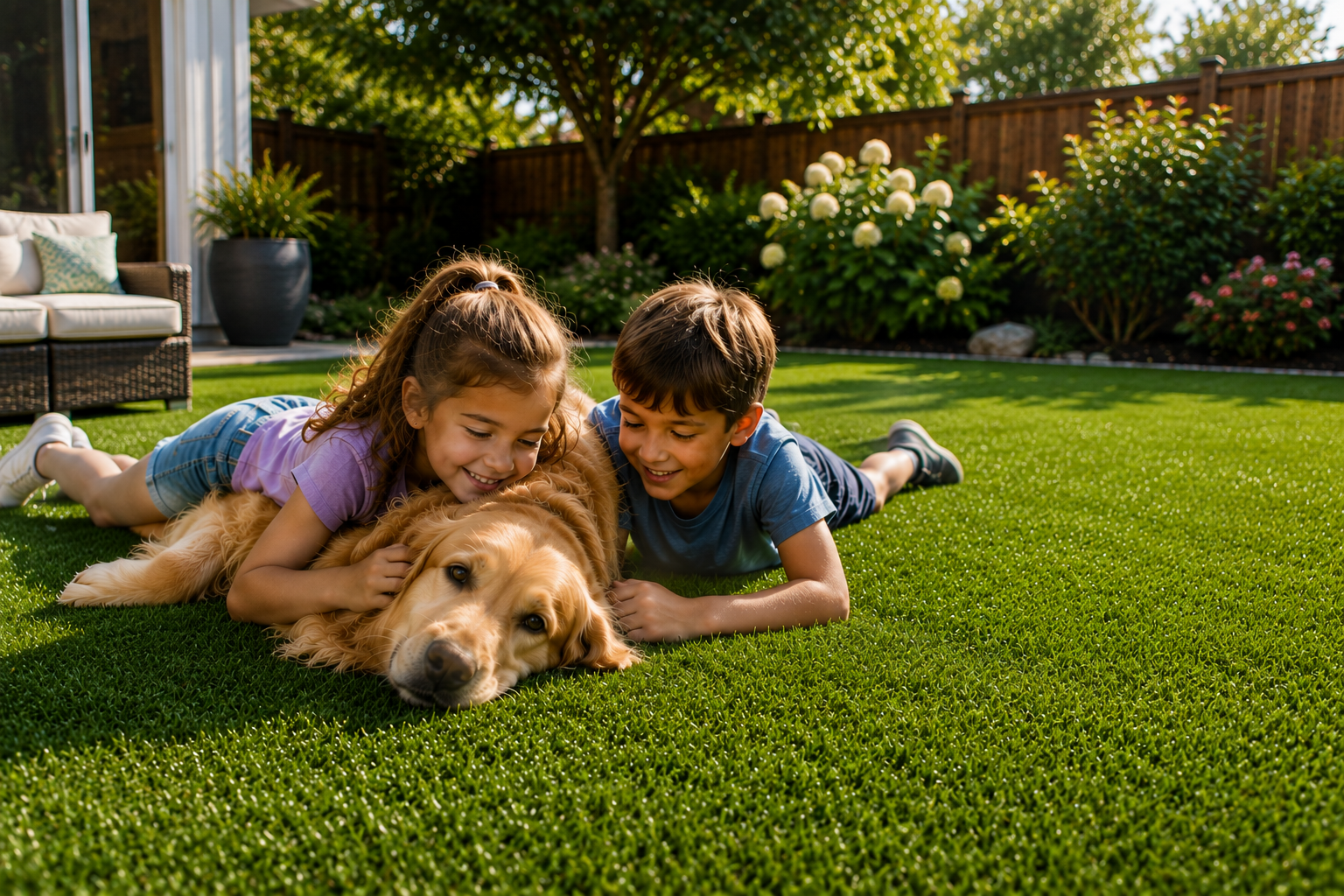
Artificial turf can look completely clean and still carry a meaningful bacterial and allergen load – especially in yards used daily by kids or pets. Cleaning removes visible debris; sanitizing addresses what you can’t see.
What Builds Up on High-Traffic Artificial Turf?
Saliva, urine, sweat, pollen, dust, and general organic residue can accumulate on turf fibers and within the infill layer over time. This is especially common in shaded, frequently used areas where moisture and debris remain longer.
Why Turf Sanitizing for Kids and Pets Matters
Children and pets spend much more time in direct contact with artificial turf than most adults do. Kids may sit, crawl, lie down, or play directly on the surface, while pets regularly walk, roll, rest, and use the same areas day after day. That repeated contact is one reason heavily used family yards can benefit from periodic sanitizing.
Where sanitizing is most valuable:
- Backyard play areas used daily by young kids
- Multi-pet households, especially with more than one dog
- Home gym or workout turf strips
- Shared or commercial turf (HOA common areas, school fields, dog parks)
Cleaning and Sanitizing Solve Different Problems
Cleaning and sanitizing are related, but they are not the same service. Professional turf cleaning focuses on removing debris, dust, organic buildup, flattened material, and other contamination that affects the appearance, drainage, and performance of the turf.
Sanitizing is intended to address microorganisms and allergens that may remain after visible debris has been removed. That is why turf sanitizing for kids and pets is often most useful after the surface has already been cleaned and prepared for treatment.
How Often Should Family and Pet Turf Be Sanitized?
The right schedule for turf sanitizing for kids and pets depends on how the yard is used. A lightly used decorative lawn may need sanitizing only occasionally, while a backyard used daily by children, pets, and guests may benefit from more frequent treatment. Pet-use areas, shaded sections, play zones, and turf around outdoor seating can also require more attention than low-traffic areas.
For many heavily used residential yards, sanitizing every four to eight weeks can be a practical starting point. The right frequency depends on the number of pets, how often children use the turf, shade, drainage, seasonal weather, and how quickly the surface becomes dirty or develops noticeable odor.
Signs Your Turf May Need Sanitizing
Visible dirt is not the only reason to consider treatment. Persistent odor, frequently used pet areas, repeated spills, heavy pollen, damp shaded sections, or turf used regularly for play and exercise can all be reasons to consider sanitizing even when the lawn still looks relatively clean.
If the turf also has pet urine odor, sanitizing alone may not be enough. A deeper pet odor removal treatment may be needed to address residue below the visible surface before sanitizing the area.
Should You Clean and Sanitize at the Same Time?
For high-use yards, combining professional cleaning with sanitizing is often the most practical approach. Cleaning first removes debris and buildup so the sanitizing treatment can reach the turf fibers more effectively. The two services address different issues but work well together when the goal is a cleaner, fresher, more hygienic outdoor surface.
A simple non-toxic sanitizing treatment, done on a regular schedule (every four to eight weeks for high-traffic yards), is a low-effort way to keep a heavily used lawn genuinely clean – not just clean-looking.
For general guidance on when and how to clean and disinfect household surfaces, see the CDC guidance on cleaning and disinfecting .
For Los Gatos households with active children, dogs, or frequently used outdoor play areas, turf sanitizing for kids and pets can be incorporated into a regular maintenance plan based on traffic, pet use, shade, drainage, and the overall condition of the turf.
Need this handled by a professional?
If your turf is used daily by children or pets, we can evaluate the surface and recommend cleaning, sanitizing, pet odor treatment, or a combination based on how the yard is actually used.