How Often Should You Clean Artificial Turf?
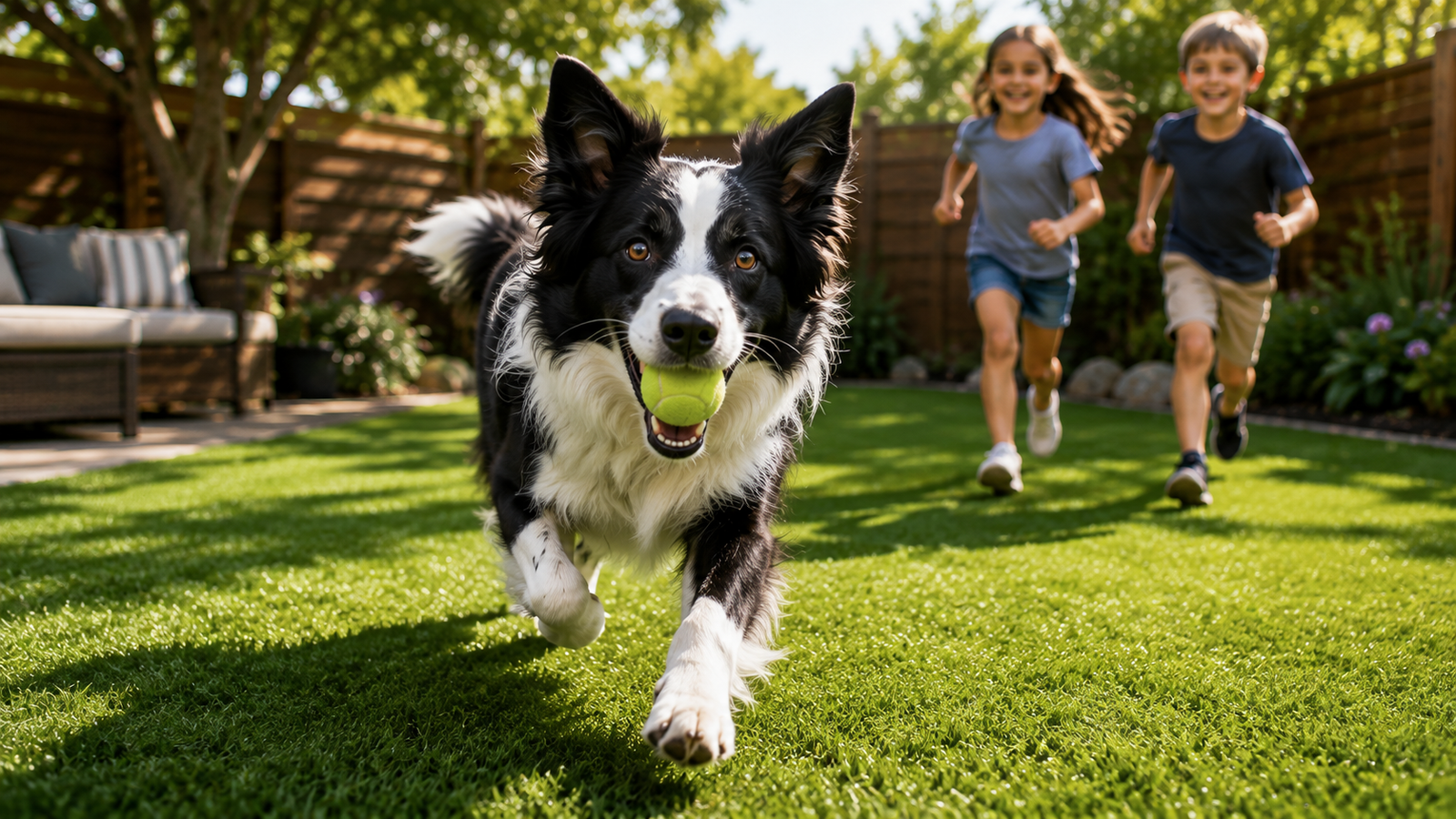
How often should you clean artificial turf? For most residential yards, a professional deep cleaning two to four times per year is a practical baseline, with lighter debris removal, brushing, and rinsing roughly once a month in between. The right schedule changes quickly, though, based on pets, tree cover, foot traffic, drainage, and how heavily the space is used.
Pets change the math. If you have one or more dogs using the turf daily, plan on a cleaning and odor treatment every four to six weeks rather than quarterly. Urine and organic residue build up in the infill far faster than most homeowners expect, and by the time odor is noticeable outdoors, it’s usually well established.
Shade and tree cover matter more than most people think. Yards under oak or other deciduous trees accumulate pollen, leaf litter, and organic debris that mats the fibers and blocks drainage. If your lawn sits under heavy tree cover, add at least one extra cleaning per year, typically right after peak leaf drop.
Traffic level is the other big variable. A backyard used daily for kids’ play, entertaining, or a home gym area will need cleaning on the more frequent end of the range. A front-yard-only install that sees light foot traffic can often stretch toward twice a year.
How Often Should You Clean Artificial Turf Throughout the Year?
A simple seasonal schedule works well for many Bay Area yards:
- Late winter/early spring: full deep clean after winter debris and rain
- Early summer: cleaning + sanitizing before peak outdoor-use season
- Early fall: cleaning after summer wear, before leaf drop
- Optional late fall/winter touch-up: debris removal after peak leaf drop
Signs Your Turf May Need Cleaning Sooner
A calendar is useful, but the condition of the lawn matters more than the date. If the turf begins looking dull, flattened, dusty, or uneven before your next scheduled cleaning, it may need attention sooner. Leaves and organic debris collecting between the fibers are another sign that routine blowing is no longer removing everything from the surface.
Drainage changes are especially important to watch. Water that once moved through the turf quickly but now sits on the surface can indicate compacted infill, accumulated debris, or another underlying issue. Professional cleaning and grooming may help restore normal performance before the problem develops into a repair.
Pet Yards Usually Need a Different Schedule
Homes with dogs generally need more frequent care than yards without pets. Urine can pass through the turf fibers and accumulate in the infill and backing, while frequently used pet zones can develop odor well before the rest of the lawn looks dirty. Removing solid waste promptly and rinsing pet areas helps, but those steps do not replace periodic deeper treatment.
For pet-heavy properties, cleaning every four to six weeks may be appropriate, especially during warmer weather when outdoor odors become more noticeable. Depending on the condition of the yard, cleaning can also be combined with pet odor removal or turf sanitizing .
Cleaning Frequency Depends on How the Turf Is Used
There is no single schedule that works for every synthetic lawn. A decorative front yard with little foot traffic may need only a few professional cleanings per year. A backyard used daily by children, pets, guests, or outdoor exercise equipment can need considerably more attention.
The best approach is to use the seasonal schedule as a starting point and then adjust it based on what you see, smell, and notice about drainage and turf appearance. If you’re still asking how often should you clean artificial turf at your property, the answer should be based on actual usage rather than a fixed calendar alone.
For broader outdoor water-use guidance in Santa Clara County, homeowners can also review Valley Water outdoor conservation resources .
The bigger risk isn’t cleaning too often – it’s waiting too long. Once infill compacts and drainage slows, water starts pooling instead of draining, which accelerates wear and can eventually require more than a routine cleaning to fix. If it’s been more than six months since your last cleaning, that’s a reasonable trigger to book one.
Need this handled by a professional?
If you’re unsure how often your turf needs professional care, we can evaluate its condition, pet use, traffic level, tree cover, and drainage and recommend a practical cleaning schedule for your property.