Best Ways to Remove Pet Odor from Turf
Learn how to remove pet odor from artificial turf and prevent persistent urine smells from returning after routine rinsing and cleaning.
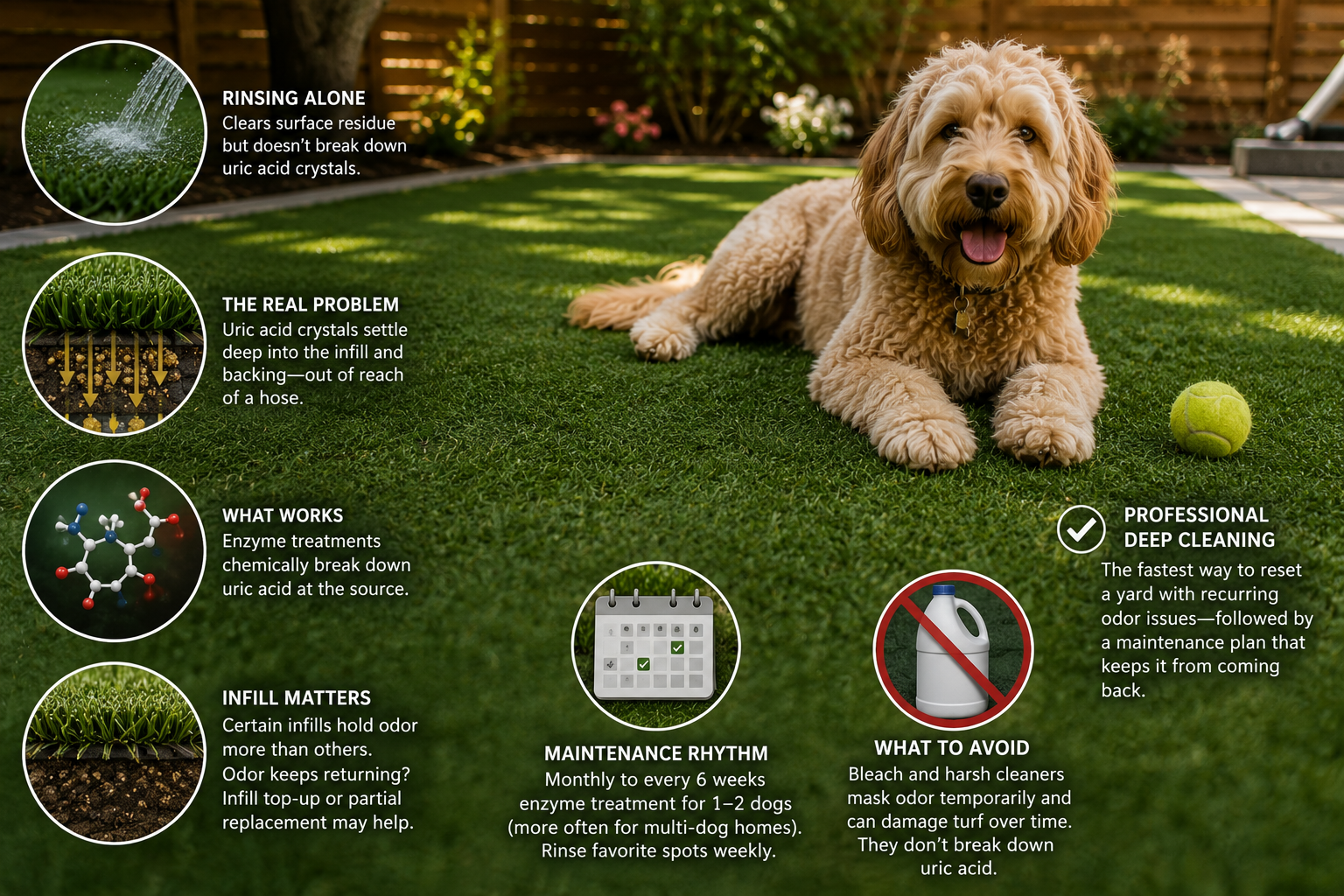
If you’ve rinsed your turf, sprayed a deodorizer, and the odor still comes back within a day or two of warm weather, the problem isn’t your effort – it’s the method. Pet urine odor on artificial turf comes from uric acid crystals that settle into the infill and backing, well below where a garden hose reaches.
Why Rinsing Alone Does Not Remove Pet Odor from Artificial Turf
A hose rinse clears surface residue but does not break down the uric acid residue itself. As contaminated areas become wet and dry repeatedly from rain, sprinklers, rinsing, or humidity, odor can return even when the turf surface looks clean.
How Enzyme Treatment Helps Remove Pet Odor from Artificial Turf
Enzyme cleaners are designed to break down odor-causing organic residue rather than simply dilute or cover the smell. Proper application, adequate dwell time, and a thorough flush are important because the treatment needs to reach the infill and lower portions of the turf system where urine residue can collect.
Why Infill Can Hold Persistent Pet Odor
Infill plays an important role in drainage, blade support, and turf performance, but it can also hold contamination over time. If odor returns quickly even after repeated treatment, heavily affected infill may need additional cleaning, replenishment, or partial replacement rather than continued surface treatment alone.
How Often Should Pet Turf Be Treated?
The right schedule depends on how many pets use the yard, where they typically go, the size of the turf area, drainage, shade, and seasonal temperatures. A lightly used yard with one small dog may need occasional treatment, while a yard used every day by multiple dogs may need much more frequent attention.
For many pet-heavy properties, professional treatment every four to six weeks can be a practical starting point. Between visits, remove solid waste promptly, rinse frequently used areas, and avoid allowing residue to build up in the same corners or fence lines week after week.
Signs the Odor Problem Is Below the Surface
If the smell returns shortly after rinsing, becomes noticeably stronger in warm weather, or is concentrated in the same pet-use areas, the problem is likely deeper than the turf fibers. Odor that persists after basic cleaning can indicate contamination in the infill, backing, or drainage layer beneath the surface.
At that point, repeatedly applying deodorizer usually provides diminishing results. The better approach is to identify the affected zones, treat the odor-causing residue directly, flush the area thoroughly, and evaluate whether the infill still needs additional attention.
A realistic maintenance rhythm for pet-heavy yards: monthly to every-six-weeks enzyme treatment for one or two dogs using the yard daily; more frequent for multi-dog households. Between treatments, a quick daily or weekly rinse of favorite spots (fence lines, corners) helps keep buildup from concentrating.
What to avoid: bleach and harsh household cleaners can damage turf backing and fibers over time and aren’t formulated to break down uric acid the way enzyme treatments are – they mask odor temporarily at best, and risk the turf itself at worst.
For homeowners trying to remove pet odor from artificial turf, the most effective approach is usually a combination of prompt waste removal, routine rinsing, periodic enzyme treatment, and deeper professional service when odor has accumulated below the surface.
If odor has been a recurring issue for more than a season, a professional deep treatment is usually the fastest way to reset the yard, followed by a maintenance schedule that keeps it from building back up.
For general guidance on cleaning and disinfecting around the home, see the CDC guidance on cleaning and disinfecting .
Need Help Removing Pet Odor from Artificial Turf?
If pet odor keeps returning after rinsing or deodorizing, we can evaluate the affected areas and recommend cleaning, enzyme treatment, sanitizing, or infill service based on the condition of the turf.